 In 2015 (the most recent year for which statistics are available), 15 million people, or 10.1 percent of the American workforce, was self-employed. Texas was right in line with the national average with 10% of the workers in this state being self-employed, according to the Bureau of Labor Statistics.
If you are self-employed or work as an independent contractor or freelancer, do you still qualify for Social Security disability benefits? And what happens if you suffer from an injury, illness, or health condition that prevents you from continuing to work for an extended period of time?
Is Social Security Disability an Option for You?
Whether or not you are eligible for Social Security disability payments when you are self-employed depends on several factors, including:
- How long you have been in the workforce.
- Whether or not you have reported your income to the government.
- Whether you have paid your Social Security taxes.
- Whether you have a qualifying disability that is expected to last longer than a year (or that is fatal).
When you are employed by another entity, your Social Security taxes are usually taken out of your paycheck. When you are self-employed, you are responsible for reporting your income and paying your Social Security taxes. As long as you pay in to the system, you have the same right to Social Security disability benefits as workers who are employed by others.
What If You Are Still Doing Some Work?
For people who are employed by others, the Social Security Administration uses a specific dollar amount to determine if they are engaged in substantial gainful activity and, therefore, able to work. The same rules do not apply to the self-employed, however. Instead, the Social Security Administration will perform a countable income test to determine if you engage in substantial gainful activity.
You are entitled to a trial work period, however, just like people who are employed by others.
Do you have questions about self-employment and disability benefits? Call our experienced Social Security disability lawyers today for more information and download a FREE copy of our report, Social Security Disability: What You Need to Know.

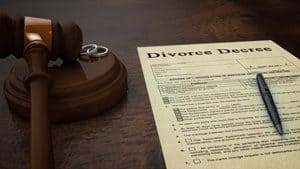
If you are receiving Social Security disability benefits based on your own work history, your divorce will have no bearing on your eligibility for Social Security disability benefits. These disability benefits depend upon your work history and your contribution to the Social Security fund, not your family or your income. Thus, if you were eligible for Social Security disabilitybenefits when you were married, you will remain eligible for such payments after your divorce.
But Will Your Payments Change?
The calculation of your payments will not change, and if you divorce without any alimony or child support obligations, the amount you receive will not change. However, if you are required to pay alimony or child support, your Social Security disability payments may be garnished to satisfy those legal obligations.
What if You Were Eligible as a Dependent Based on Your Spouse’s Work History?
In limited circumstances, the Social Security Administration allows spouses of workers eligible for Social Security disability to also collect benefits. Generally, a spouse may be eligible for Social Security disability if the spouse is:
- Aged 62 or older
- Caring for a minor child under the age of 16
- Caring for a disabled child
After a divorce, you may continue to receive Social Security disability benefits as an ex-spouse if:
- You were married for at least 10 years.
- You are aged 62 or older.
- You have not remarried.
- You are not entitled to a bigger Social Security payment on your own.
If your children are receiving Social Security disability dependent benefits, your divorce is unlikely to impact those benefits.
Other Social Security programs, including supplemental security income, have different rules about how divorce impacts payments. Thus, it is important to know exactly how your benefits, and those of your family members, will be impacted by a divorce. To find out more, please contact Morgan Weisbrod today to schedule a free consultation with an experienced Social Security disability lawyer.
 If you receive Social Security disability benefits, those benefits may be taxable. Social Security disability is not a need-based program. Therefore, there are often significant differences in recipients’ taxable income even if they are not working due to a disability, and some people end up paying taxes while others do not.
According to the Social Security Administration, approximately 33% of Social Security disability recipients pay taxes on their benefits.
Will You?
Your responsibility to pay taxes—and the amount of those taxes—depends on your total income as well as the income of your spouse. According to the Social Security Administration:
- If your annual income is more than $25,000 and you file your taxes as an individual, you may have to pay taxes on Social Security disability benefits.
- If your annual income is more than $32,000 and you file your taxes jointly with your spouse, you may have to pay taxes on Social Security disability benefits.
Income could include wages, interest earned, or dividends. The percentage of your benefits that are taxed will depend on the amount of income you must declare on your tax returns. Your tax rate on Social Security disability benefits will be the same as it is on your other types of income.
If you reside in Texas, your Social Security disability benefits will not be subject to a state income tax because the state does not currently impose a state income tax.
It is very important that you list your Social Security benefits as well as all other sources of income when you pay taxes. If you have questions about your Social Security benefits and your taxes, be sure to speak with a tax advisor or accountant. If you have questions about your Social Security disability claim, we encourage you to contact our experienced Social Security disability attorneys for more information.
At first glance, there is no way to speed up your Social Security disability benefits claim. There is a backlog of cases, and you have to wait in line for your case to be heard. just like everyone else.
However, you should keep a few things in mind during your application process that could potentially save you months of waiting. Specifically, you can:
- Check the Compassionate Allowances list. If you are suffering from one of the very serious medical conditions listed by the Social Security Administration in the Compassionate Allowances Initiative, you qualify for an expedited application process. The Social Security Administration began the Compassionate Allowance program in 2008 and continually makes updates to the conditions that are included for expedited review.
- Fill out your initial application completely and accurately. Two out of three applications for Social Security disability benefits are rejected at first. In many cases, it is simply because the applicant did not provide enough information proving their disability or because the applicant did not fill out the application correctly. While these applicants may eventually qualify for benefits, they will have to wait extra time while they go through the appeals process.
- Hire a Social Security disability lawyer. A lawyer can make sure your application is completed accurately and can monitor the status of your application to make sure there are no unnecessary delays. Additionally, if an appeal needs to be filed, a lawyer can do so as quickly as possible.
You become eligible for Social Security disability benefits in the sixth full month after your disability onset date. Our goal is to help you get the Social Security disability benefits you deserve as close to your eligibility date as possible so that you can start receiving the benefits to which you are legally entitled. To learn more about how we can help you, please schedule an initial consultation with us today. You can reach us by phone or via this website at your convenience.
Every case is unique. However, for some Social Security disability applicants, the time that it takes to get Social Security disability benefits may seem exceedingly long. Even if your application is approved on the first try (and most are initially denied) the wait can be several months long.
The Official Wait Time
The Social Security Administration (SSA) will determine the date on which your disability began. You only become eligible for benefits in the sixth full month following that date. The first five months are considered a waiting period and, even if your application was to be approved during that time, you would not be eligible for Social Security disability benefits.
Of course, in some cases, the waiting time for Social Security disability benefits can be much longer. Your benefits may be delayed, for example, if your initial application for benefits is denied. Two-thirds of Social Security disability applicants have their initial applications denied. You have the right to appeal the denial; however, it could take over a year to finish the process and to get the Social Security disability benefits you deserve.
Now Is the Time to Help Speed Things Along
The more you know about how to complete your paperwork and how to successfully apply for benefits, the more likely you are to secure disability benefits sooner.
Additionally, there is a group of 100 different diseases and conditions on the SSA’s Compassionate Allowances list. If you are suffering from one of these illnesses, your application for benefits can be fast-tracked.
Our board-certified disability lawyers are committed to helping our clients get the benefits they deserve as quickly as possible. We will do our best to shorten your wait time so that you can start receiving the benefits you need. For more information about how we may help you, please start a live chat with us now or call us directly to schedule an initial consultation.

Homeless man
Even if you don’t have a permanent address or a place to call your own, you can still qualify for veterans’ disability benefits. Homelessness should not prevent you from recovering veterans’ disability benefits if you qualify for such benefits.
How Many Veterans Are Homeless?
Since 2010, the number of homeless veterans in the United States has been cut in half according to information from the United States Department of Veterans Affairs (VA). Yet in Texas alone there were an estimated 2,393 homeless veterans in 2016—putting Texas among the top five states in the country with homeless veterans.
Many homeless veterans suffer significant disabilities such as post-traumatic stress disorder (PTSD), brain injuries, amputations, and other injuries that prevent them from earning a living wage and supporting themselves. If you suffer one of these disabilities—or any other that is connected to your time in the service—you may qualify for veterans’ disability benefits.
There Are Programs to Help
Homeless veterans are eligible for all of the same veterans’ assistance programs as other veterans—including disability benefits if they so qualify. To find out if you qualify for veterans’ disability benefits, you must fill out a complete application with the VA. While the process may seem overwhelming, an attorney can help you through it so that you get the benefits you deserve.
In addition to veterans’ disability benefits, the Department of Veterans Affairs offers homeless veterans and veterans in danger of becoming homeless a number of programs and resources to help keep them sheltered and off the streets. These homeless veteran programs involve different types of assistance, including job training and placement, substance abuse programs, general health care, and mental health counseling.
If you are a homeless veteran seeking disability benefits, you should know that we are here to help. Please contact our experienced attorneys directly via this website or by phone to set up an initial, no-obligation consultation and to make sure you are getting all of the benefits you have earned.
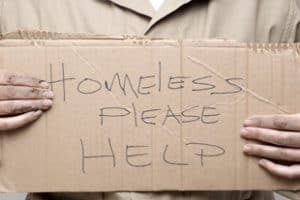 Yes. Your housing status has no impact on your Social Security disability eligibility. Whether you are currently living in a homeless shelter, living with a friend or relative, or living on the streets, you are absolutely still eligible to collect Social Security Disability Insurance (SSDI) benefits if you qualify.
You Are Not Alone
A significant percentage of the homeless population is disabled. Having a disability may make it difficult or impossible to work and, without an income, it can be difficult to have consistent housing. The Social Security disability benefits system is in place to help you if you can’t work because of a disability and if you cannot afford basic needs like shelter, food, and clothing.
Don’t Let Your Homelessness Prevent You From Applying for Benefits
Sadly, being homeless often serves as a barrier to successfully apply for disability benefits. Faced with long waiting periods, a trying application process, limited access to medical care, and other stumbling blocks, many homeless or sheltered people do not receive the benefits they so desperately need.
However, the Social Security Administration (SSA) must consider your application and, if you meet the Social Security disability eligibility requirements, the SSA must approve your application. Then, the SSA should work with you to determine how best to get your benefits to you if you qualify.
The first step is to file a complete application with the SSA online or at your local office. The SSA may also be able to provide you with information about local housing resources and support.
Our board-certified Social Security disability lawyers believe that everyone—regardless of their housing status—has the right to apply for Social Security disability benefits. If you are disabled and homeless, we encourage you to contact us via this website or by phone for more information. We will work hard to make sure that your rights are protected and that you get the benefits you deserve.
 If you have served in southwest Asia military operations at any time from August 2, 1990 to the present and you suffer from an undiagnosed or chronic medical condition, you may be eligible for veterans’ disability benefits.
What Conditions Are Included?
Presumptive diseases for Gulf War veterans are sometimes referred to as Gulf War Syndrome or Gulf War illness.
They include symptoms of undiagnosed illnesses such as:
- Abnormal weight loss
- Fatigue
- Cardiovascular disease
- Muscle and joint pain
- Headaches
- Menstrual disorders
- Neurological and psychological problems
- Skin conditions
- Respiratory disorders
- Sleep disturbances
Other presumptive diseases for Gulf War veterans include diagnosable gastrointestinal disorders such as:
- Irritable bowel syndrome
- Functional dyspepsia
- Functional vomiting
- Functional constipation
- Functional bloating
- Functional abdominal pain syndrome
- Functional dysphagia
Chronic fatigue syndrome and fibromyalgia are also considered presumptive diseases for Gulf War veterans. Other conditions may also qualify you for benefits.
How to Prove Eligibility
To qualify for benefits because of an undiagnosable illness, a gastrointestinal illness, chronic fatigue syndrome, or fibromyalgia you need to prove that:
- The condition began during active duty or prior to the end of 2021. If your illness or disability did not begin during active duty, it must be at least 10 percent disabling.
- There is no other cause for your illness or disability than your service in southwest Asia.
- Your illness or disability has existed for six months or longer.
You must provide evidence of your service in the Gulf region and medical evidence of your diagnosis and treatment. The Department of Veterans Affairs (VA) may request an examination if there is no medical evidence of treatment for your disability or illness.
You may apply for benefits online or in person at your local VA office. You have the right to consult with an experienced veterans’ disability lawyer prior to applying, or after, to make sure that your rights and benefits are protected. If we can help you during this time, please do not hesitate to contact us through this website or by phone.
 In Vietnam and the Korean demilitarized zone, the United States military used Agent Orange, a powerful herbicide and defoliant, to clear thick jungle and expose the enemy. Unfortunately, some of those in uniform who were exposed to the chemical subsequently suffered from a range of serious illnesses and conditions that have been linked to Agent Orange.
Who Was Exposed to Agent Orange?
The Department of Veterans Affairs assumes that the following people were exposed to Agent Orange:
- Anyone who served in Vietnam from January 9, 1962 – May 7, 1975. This includes veterans who made brief visits to land or who served on ships in Vietnam’s inland waterways.
- Anyone who served in or near the Korean demilitarized zone from April 1, 1968 – August 31, 1971.
If you can prove that you served in these locations during these times and that you were not dishonorably discharged, you do not have to prove that you were exposed to Agent Orange in order to get veterans’ disability benefits for a disease that may develop because of Agent Orange exposure.
You may also recover veterans disability benefits if you can prove that you were exposed to Agent Orange and you served:
- On or near military bases in Thailand during the Vietnam Era
- Where herbicides were tested and stored outside of Vietnam
- As a crew member on a C-123 plane after the Vietnam War
- On a Department of Defense project to test, store, or dispose of herbicides
To file a successful Agent Orange-related disability claim, a veteran must prove where and when he served, he must provide a medical diagnosis of a disease that is linked to Agent Orange exposure, and he must prove that the disease occurred after the exposure.
What Illnesses Are Associated With Agent Orange?
The VA recognizes that the following diseases are related to Agent Orange exposure:
- AL Amyloidosis
- Chloracne
- Chronic B-Cell leukemia
- Type 2 diabetes
- Hodgkin’s disease
- Ischemic heart disease
- Multiple myeloma
- Non-Hodgkin’s lymphoma
- Parkinson’s disease
- Peripheral neuropathy
- Porphyria cutanea tarda
- Prostate cancer
- Respiratory cancers
- Soft tissue sarcoma
A medical diagnosis is required before veterans’ disability benefits will be awarded.
How to Get the Veterans’ Disability Benefits You Deserve
If you believe your illness or disease is linked to your exposure to Agent Orange in Vietnam or elsewhere, it is important to speak with a veterans’ disability attorney regarding your case. While a connection between your service and your illness may be presumed, your disability benefits are not automatic. Please contact us today via this website or by phone for more information about how to protect your rights and fair recovery of benefits.
If you have been diagnosed with type 2 diabetes and believe that your condition was caused by or made worse by your service in the military, you could be eligible for veterans’ disability benefits. In fiscal year 2015 (the most recent year for which statistics are available), diabetes was the 9th most common disability among all veterans’ disability recipients. In that year, 431,166 veterans received benefits because of their type 2 diabetes.
How They Qualified
There is more than one way to qualify for veterans’ disability benefits if you have type 2 diabetes. Specifically, you may qualify for benefits if:
- You can prove that your diabetes was caused by your active duty in the military or by a condition that you suffered because of your active duty in the military.
- You served in Vietnam between January 9, 1962 and May 7, 1975. If you set foot on soil in Vietnam, the Department of Veterans Affairs presumes that you were exposed to Agent Orange, a toxic herbicide used during the Vietnam War that medical professionals have connected to a variety of illnesses, including type 2 diabetes. Vietnam veterans who can prove that they were not dishonorably discharged and that they have type 2 diabetes may qualify for disability compensation.
When you apply for benefits, it is important to describe all of the conditions associated with your type 2 diabetes. For example, you should make sure that information about all related conditions is included with your applications, including:
- Vision problems
- Heart problems
- Stomach, gallbladder, or kidney problems
- Any other health impairments
Don’t assume that you will get benefits simply because you are a veteran with type 2 diabetes. Instead, make sure that the Department of Veterans Affairs has all of the information it needs to make the right decision on your claim. For help doing that, please contact us today via this website or by phone to learn more about your rights.







Free Offer