 You may be eligible for Social Security disability benefits, but your eligibility is not automatic. The Social Security Administration does not currently include pancreatitis as a condition in the Listing of Impairments. Therefore, you are going to have to prove that this chronic condition has caused physical limitations that leave you unable to work.
Complications of Chronic Pancreatitis
Pancreatitis occurs when the pancreas gland is inflamed. When the pancreas is inflamed and not working properly, the body’s production of insulin and digestive enzymes can be impacted. All forms of pancreatitis are extremely painful and may result in short term disability. However, the symptoms of acute pancreatitis go away once the inflammation of the pancreas goes away. Chronic pancreatitis, however, can continue with symptoms such as:
- Stomach pain
- Vomiting
- Diarrhea
- Significant weight loss
Typically, people who suffer from chronic pancreatitis are eligible for Social Security disability in one of two ways:
- They qualify pursuant to Section 5.08 of the Listing of Impairments. This section allows people who suffer weight loss due to any digestive disorder to be eligible for Social Security disability if certain criteria are met. Specifically, the applicant must have a body mass index (BMI) of less than 17.50 on at least two separate occasions at least sixty days apart within six consecutive months.
- They qualify because their symptoms make them unable to work. The Social Security Administration may look at your residual functional capacity, or your ability to work given your physical limitations. For example, if you are in serious pain and spending lots of time in the bathroom, you may be unable to work effectively and you may be eligible for Social Security disability.
If you suffer from chronic pancreatitis, it is important to have thorough medical records and to work with a board certified lawyer who can help you get the benefits you deserve. To learn more, we encourage you to read our FREE book, Social Security Disability: What You Need to Know, and to contact us directly to have your questions answered.

Yes, you are eligible for Social Security disability benefits if your status on the heart transplant waiting list is either 1a or 1b.
As you already know, there are more people who need heart transplants than there are healthy hearts available for transplanting. Accordingly, people in need of heart transplants are assigned a certain status when they go on the national waiting list maintained by the United Network of Organ Sharing. The status reflects the priority in which they should receive a heart when one becomes available.
Those Who Are Assigned Status 1 Are Eligible for Social Security Disability
Currently, there are four potential statuses that you may be given when you are on the heart transplant waiting list. These statuses include:
- Status 1a. Patients classified as 1a are the most critically ill. They require hospitalization and life support measures, and they typically have a very limited life expectancy unless they are able to receive a heart.
- Status 1b. Patients classified as 1b are dependent on intravenous medication or a mechanical assist device in order to stay alive until a heart is received. They may be in the hospital or at home awaiting news that a heart has become available.
- Status 2. Patients in this classification are medically stable with just oral medications and are able to live at home until a heart becomes available.
- Status 7. Patients who receive this classification are on the inactive list due to a change in condition, but may get credit for time that they were already on the waiting list should they need to change to status 1a, 1b, or 2 in the future.
Patients who are assigned status 2 or status 7 are not automatically eligible for Social Security disability benefits.
However, heart transplant waiting list status 1a and status 1b are included on the Social Security Administration’s Compassionate Allowances List. That means that not only will you be eligible for benefits, but that your claim may be fast tracked.
Once your heart transplant surgery occurs, you may continue to be eligible for Social Security disability benefits pursuant to Section 4.09. Specifically, you may be eligible for benefits for one year post surgery or longer if you meet the requirements for eligibility pursuant to a different listing or because of your inability to work.
You are doing a lot of waiting right now. As you wait for word that a heart is available for you, please make sure that your right to receive Social Security disability benefits is protected and that your wait for Social Security disability is no longer than it has to be. Please contact a board certified attorney via this website or by phone today to learn more.
Chronic leukemia is often treatable when it is diagnosed early. However, once the cancer has reached the blast phase it is often fatal and it is included in the Social Security Administration’s list of compassionate allowances. Inclusion on the list of compassionate allowances will allow your case to proceed through the eligibility process faster than it otherwise would, but it does not change the criteria for Social Security disability eligibility.
Only Some People With Chronic Leukemia Are Eligible for Social Security Disability
You may be eligible for Social Security disability benefits if you meet the requirements in the Listing of Impairments or if you are unable to work because of your cancer.
According to Section 13.06 of the Listing of Impairments, people who suffer from chronic myelogenous leukemia may qualify for benefits in one of two ways. You may be eligible for benefits if one of the following is true:
- You are in the accelerated or blast phase. This will be considered a disability for at least 24 months from the date of diagnosis or relapse or at least 12 months from the date of a bone marrow or stem cell transplant—whichever is later. After that, you will need to establish eligibility by proving that there is residual impairment to a specific body system.
- You are in the chronic phase. This will be considered a disability if you have a progressive disease following initial anticancer therapy or for at least 12 months from the date of a bone marrow or stem cell transplant (after that, eligibility may be established if you can prove that there is residual impairment to a specific body system).
Additionally, you may be eligible for benefits if you can prove that your chronic leukemia is equal in severity to another listing in the Listing of Impairments or if you are unable to work any job because of your medical condition.
Be Prepared to Fight for the Benefits You Deserve
You are already fighting every day to manage your chronic leukemia, to comply with your doctors’ orders, and to live out the rest of your life on your terms. The last thing that you need is another fight for the Social Security disability benefits that you’ve earned.
However, it can be difficult to convince the Social Security Administration that you are eligible for Social Security disability benefits. Our experienced Social Security disability lawyers can remove this stress from your shoulders and work hard to get you the fair and just benefits you deserve. We will work with you to file a complete application or to appeal a denial of benefits. Please contact us today via this website or by phone to learn more.
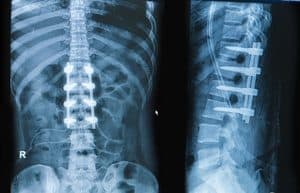 Yes, you may be eligible for Social Security disability benefits if you underwent spinal fusion surgery and you remain disabled after the surgery. You likely consented to this type of serious spinal surgery with the hope and the expectation that you would feel better and that your quality of life would improve after surgery.
Unfortunately, spinal fusion surgery has risks and those risks can leave you disabled. Instead of feeling better after spinal fusion surgery, you may experience:
- Infection
- Damage to nerves in the spinal column
- Damage to blood vessels near the fusion site
- Joint pain on either side of the fusion site
These risks can result in permanent medical conditions that leave you unable to work.
Social Security Disability Eligibility
You may be eligible for Social Security disability benefits if you can prove that your disability is included in the Social Security Administration’s Listing of Impairments (known as the Blue Book) or if you can prove that you are totally and permanently disabled and unable to work.
You may qualify if you meet the requirements of Section 1.04 of the Listing of Impairments. This section, which covers disorders of the spine, allows you to recover disability benefits if you have a spinal condition that results in the compromise of a nerve root or of the spinal cord and one of the following is also true:
- You experience nerve compression that results in pain, muscle weakness, sensory and reflex loss, and that impacts your lower back and legs.
- You suffer inflammation in the membrane around the spine that results in burning and in you having to change position often (or at least once every two hours).
- You experience a narrowing of the spinal canal that results in pain, weakness, and difficulty walking.
Finally, you may qualify if you can prove that you meet another section of the Blue Book or if you can prove that your residual functional capacity is so diminished by your condition that you cannot work. For example, if your spinal fusion surgery left you unable to walk, your condition may be equal in severity to Section 1.03 of the Blue Book which applies to the surgery or fusion of weight-bearing joints. While the spine is not a weight-bearing joint, the effect of your spinal fusion surgery may be the same as a fusion surgery on a hip, knee, or other weight-bearing joint.
Be Prepared Before You File a Social Security Disability Application
You will need medical evidence and a complete and compelling Social Security disability application in order to get the benefits you deserve. For help submitting a strong application or for a fair review of your claim, please contact a board certified Social Security disability lawyer today via this website or by phone.
It depends. Some people with prosthetic limbs are eligible for Social Security disability benefits and others are not eligible for benefits. At first glance, this may seem arbitrary or unfair. However, the Social Security Administration considers specific factors to determine whether a person with a prosthetic limb is eligible for disability benefits.
How the Social Security Administration Decides
If you have a prosthetic limb that allows you to walk effectively, your application for Social Security disability benefits may be denied. However, you may be eligible for benefits if you can prove that even with a prosthetic limb:
- You are limited in the amount of time that you can stand or walk.
- You have difficulty walking without assistance.
- You need crutches, a cane, a wheelchair, or another assistive device to walk.
- You have difficulty managing public transportation on your own or driving.
- You face other limitations because of your amputation, despite your use of a prosthetic limb.
Your prosthesis may dramatically improve your quality of life, but you may still be unable to do the work you did prior to your amputation or to perform another job.
How to Make a Case to the Social Security Administration
When you submit your Social Security disability application, it is important that you have accurate and complete information to prove that you are unable to work. This includes, but may not be limited to:
- Medical records. The Social Security Administration will want to know that you are complying with your doctor’s recommendations regarding the prosthesis.
- Employment history. The Social Security Administration will assess what jobs you may realistically perform and this will depend, in part, on your previous work experience.
Social Security disability applications can be complicated, but it is important to fill them out fully and correctly so that you can start getting the benefits you deserve as soon as possible. To learn more, please read our free Social Security Disability Fact Sheet and contact us directly for a free consultation.
Yes. The Department of Veterans Affairs (VA) stopped using the name Gulf War Syndrometo refer to these clusters of chronic symptoms with no known causes because the signs of this class of illness can vary significantly from person to person. The condition is now referred to as a chronic multi-symptom illness or an undiagnosed illness.
Do You Have One of These Conditions?
You may qualify for veterans’ disability benefits if you have:
- Chronic fatigue syndrome. Significant and persistent tiredness that is not explained by other causes or relieved by rest can impact your ability to work and to go about your daily activities.
- Fibromyalgia. Muscle pain and other symptoms can interfere with your life and result in a disability.
- A functional gastrointestinal disorder. Abnormal functioning of a gastrointestinal organ can be painful and result in a disability. Irritable bowel syndrome (IBS) is an example of this type of disorder.
- An undiagnosed illness. Depending on the symptoms and their severity, it is possible to have an undiagnosed illness that seriously impacts your life.
Symptoms of these illnesses can include:
- Unexpected weight loss
- Muscle and joint pain
- Headaches
- Fatigue
- Memory problems
- Dizziness
- Digestive issues
- Respiratory disorders
- Cardiovascular diseases
- Skin conditions
- Neurological and physiological problems
- Sleep disturbances and insomnia
You do no need to demonstrate a connection between your service and your illness if:
- You served the Southwest Asia theater of military operations
- Your condition began during active duty or before the end of 2021
- You are at least 10% disabled
- Your condition cannot be explained by another cause
Having an unexplained illness can be scary. Continuing with your medical care is important, and learning how to be compensated for your service-connected illness is important, too. To find out more about your options, talk to one of the knowledgeable Texas veterans’ disability lawyers at Morgan Weisbrod today. Contact us toll-free or through this website for more information.
 You can only receive Social Security disability benefits if you have paid enough into the Social Security system. The Social Security Administration (SSA) determines whether you qualify based on the number of work credits you have earned and your age.
Each year, work credits are calculated from your income taxes. The amount that you must earn before earning a credit is re-evaluated and adjusted as needed according to the average wage index—the constant being that you can only earn four credits in one year, no matter how large your income.
Work Credits Needed for People Age 31 and Older
For applicants born after 1929 who became disabled from age 31 to 61, the number of work credits you need will change every couple of years. To illustrate:
- Ages 31–42: 20 credits are needed
- Age 44: 22 credits are needed
- Age 46: 24 credits are needed
- Age 48: 26 credits are needed
- Age 50: 28 credits are needed
- Age 52: 30 credits are needed
- Age 54: 32 credits are needed
- Age 56: 34 credits are needed
- Age 58: 36 credits are needed
- Age 60: 38 credits are needed
- Ages 62 or older: 40 credits are needed
Keep in mind that as long as you aren’t applying due to blindness, at least 20 work credits must have been earned in the ten years prior to filing.
Work Credits Are Just One Important Piece of Social Security Disability Eligibility
Once you determine that you have the necessary work credits to apply for Social Security disability, you will need to prove that you are eligible for benefits because you have a qualifying disability that will keep you from working for 12 months or longer or that is expected to be fatal.
Applying for Social Security disability benefits can be confusing, but it is important to your future. If you have questions about Social Security disability eligibility or the claims process, we encourage you to contact us directly to schedule an initial consultation. You can also request a FREE copy of our book, Social Security Disability: What You Need to Know to learn about protecting your rights.
 Many Navy veterans are concerned about asbestos exposure, and with good reason. Symptoms from exposure-related illnesses can take 20 to 50 years to manifest. Unfortunately, by this point, illnesses have usually progressed to advanced stages. Thus, it is important for Navy veterans to know if they may have been exposed to asbestos, to know what health conditions could develop because of that exposure, and to understand the veterans’ disability benefits they may receive if they become sick.
How Asbestos Was Used in Navy Ships
Until restrictions were placed on its use in the 1970s, asbestos offered a heat- and fire-resistant building material that was both inexpensive and durable. Though it was most often used in areas that needed a degree of heat resistance, U.S. Naval vessels of the era used the material in hundreds of applications: from boiler rooms and ammunition storage rooms to bunkers and the mess hall.
The most hazardous areas of U.S. Naval vessels for asbestos exposure were below deck. Navy veterans with the most exposure risk will have spent a lot of time in the lower areas of the ship, such as the:
- Engine room
- Boiler room
- Pump room
However, asbestos-sealed wiring and pipes were often exposed for ease of access throughout the ship—meaning it was possible for a veteran to sleep in a bunker beneath materials that were regularly shedding asbestos fibers.
The Dangers of Asbestos Exposure
People who are exposed to asbestos may breathe in the tiny asbestos fibers and suffering lung-related illnesses, such as:
- Asbestosis
- Lung cancer
- Mesothelioma
All of these conditions are serious and require a prompt medical diagnosis and quick treatment.
Veterans’ Benefits May Help If You Become Sick
If you are a veteran who was not dishonorably discharged, were exposed to asbestos while in military service, and have developed an asbestos-related illness, you may be eligible to receive veterans’ disability benefits. Our experienced disability lawyers will work hard to get you the full benefits you deserve. Please contact us via this website or by phone today to learn more.
It’s not at all unusual for a veteran to feel the way your friend did about the interview segment of a C&P—or Compensation and Pension—Exam.
The first thing you should remember is that the Department of Veterans Affairs (VA) physician handling the exam is trying to obtain the best possible understanding of your situation. Because of this, the questions he or she asks will generally be with the purpose of determining or confirming the following:
- The details of your health condition
- How your health condition impacts your day-to-day life
- If and how the health condition is related to your time in the service
Many of the questions in the C&P interview might make you feel uncomfortable, vulnerable, or like the doctor doesn’t trust you. However, no matter how the questions make you feel, keep in mind the following:
- It’s important to the success of your claim that you are honest and responsive. Don’t overstate the impact of your condition, but don’t underestimate it, either. Take as much time as you need to give detailed and thoughtful answers.
- Always treat the physician with respect, no matter how you feel about him personally. Shutting down will hurt your claim tremendously.
You are allowed to bring a friend or family member with you to the exam if that makes you more comfortable. However, your friend or family member cannot answer questions on your behalf. The physician wants to hear from you.
Keep in mind that the VA encourages you to report any negative experiences with your C&P physician examiner as soon as possible. You can do that by contacting the physician’s supervisor, a VA patient advocate, or by calling the number on your appointment letter.
If you need more help in preparing for a C&P exam or any other aspect of the veterans’ disability claims process, please contact our experienced veterans disability benefits attorney for a no-cost consultation today.
Yes, your daughter may qualify for Social Security disability benefits even if her IQ is not quite low enough to qualify her as having an intellectual disability. However, building a compelling case for Social Security disability benefits will involve a lot of legwork and a thorough knowledge of how the Social Security disability system works.
Borderline Intellectual Functioning
If your daughter’s IQ is between 71 and 84, she is in the range of borderline intellectual functioning (BIF). People with BIF do not have an intellectual disability for purposes of Social Security disability benefits, and if a lower-than-average IQ score is her only issue, then she won’t be able to obtain benefits.
However, if your daughter has mental functional capacity issues that extend beyond her IQ score, she may qualify for Social Security disability benefits.
How to Help Your Child Prove That She Qualifies for Social Security Disability
Before you have your child apply for Social Security disability, it is important to gather all of the information that will be relevant to her application, including:
- Medical evidence, including a mental Residual Functional Capacity (RFC) form completed by her primary physician.
- Statements from teachers, former supervisors, and anyone who has instructed, trained, or worked with your daughter.
- Job and education-related assessments and reviews.
- Any documentation describing disciplinary action or reasons for discharge from former employers that will support your claims of her other limitations.
You may also want to seriously consider hiring an experienced disability attorney to help you navigate the challenges of proving your daughter’s disability claim in spite of these special circumstances. To learn more, call Morgan Weisbrod today. Our compassionate and skilled team is here to answer your questions and to help your daughter get the disability benefits she deserves.







Free Offer